Discover how to spin fish in the sea: techniques, ideal tackle, the predators to target, the best spots and why to choose professional guides.
Saltwater spinning is a discipline that combines technique, adrenaline and a deep connection with the marine environment. This technique, increasingly popular among enthusiasts, lets you target combative and spectacular species thanks to the use of artificial lures that perfectly imitate small fish or prey in difficulty. In this article we'll discover what saltwater spinning is, which techniques really work, which spots offer the best chances of a catch and which tackle to choose. Finally, we'll see why fishing alongside a professional guide can completely transform your experience.
What saltwater spinning is
Spinning in the sea is an active technique based on the use of artificial lures designed to imitate forage fish or small prey in difficulty. The goal is to stimulate the fish's predatory instinct by playing on movement, vibrations and light.
It is a mobile and strategic kind of fishing: you explore different spots, vary the retrieve and adapt the lures according to water conditions and the species you want to target. Saltwater spinning lets you encounter a great variety of combative fish, including:
- sea bass – often in river mouths and shallow waters; an intelligent and selective predator;
- bluefish – feared for its explosive attacks and sharp teeth;
- Mediterranean barracuda – it prefers harbours and reefs;
- tuna – powerful and resilient, capable of long chases and lightning-fast attacks on lures;
- amberjack and leerfish – powerful and fast, they chase lures retrieved at speed.
These predators determine the choice of tackle and techniques we'll see below.
Saltwater spinning techniques
Saltwater spinning can be approached in several ways, all customisable according to the predator and the sea conditions.
- Light spinning: perfect for sea bass, garfish and medium-sized predators. You use small lures, slower retrieves, microjerks and pauses.
- Medium and heavy spinning: suited to bluefish, barracuda and large amberjacks. It requires more power and firmer retrieves, often fast and linear.
- Topwater: one of the most exciting techniques, in which poppers and walking-the-dog lures are worked on the surface, triggering loud attacks visible to the naked eye.
- Soft bait and jighead: effective especially in winter and in rough seas. The slow retrieve along the bottom perfectly imitates injured or disoriented fish.
- Metal jig: ideal when fish are feeding on the surface or in deep water. The frantic retrieve makes them irresistible to pelagic species.
The best spots for saltwater spinning
To spin fish in the sea it is essential to know how to choose the right spot:
- River mouths: places rich in food, perfect for sea bass;
- Harbours and piers: excellent for barracuda and nocturnal predators thanks to the lights that attract forage fish;
- Reefs: more oxygenated water rich in shelter, perfect in every season;
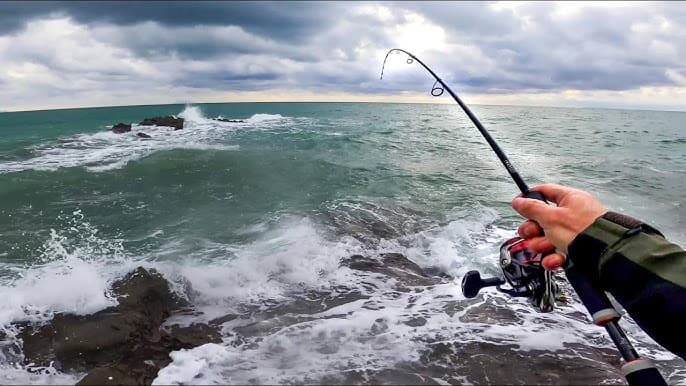
- Beaches: especially after rough seas, when sea bass come close to shore to hunt among the foam;
- Offshore (feeding frenzies): the realm of bonito, little tunny and other fast predators.
When to practise saltwater spinning
Saltwater spinning can be practised all year round, but there are periods and conditions that make outings particularly productive. Autumn is generally the best season, when predators are very active and come close to the coast in search of food. Winter too can be very rewarding, especially for sea bass that move into shallow water during light swells. With spring the amberjacks return and conditions become more stable, while in summer it's best to focus on dawn and dusk, the moments when bluefish are most aggressive.
The ideal situations for spinning include a slightly rough sea, cloudy skies and the first or last light of day, preferably with plenty of forage fish that inevitably attracts predators.
Choose to rely on a professional
fishing guide for saltwater spinning
Saltwater spinning is a technical and complex discipline that requires experience, observation and the ability to adapt to the environment. This is why more and more anglers choose to rely on a professional guide, who offers access to selected spots, technical support on retrieves, lures and reading the water, and suitable tackle that is always available.
Discover our professional guides and contact them for a truly high-quality saltwater spinning experience.